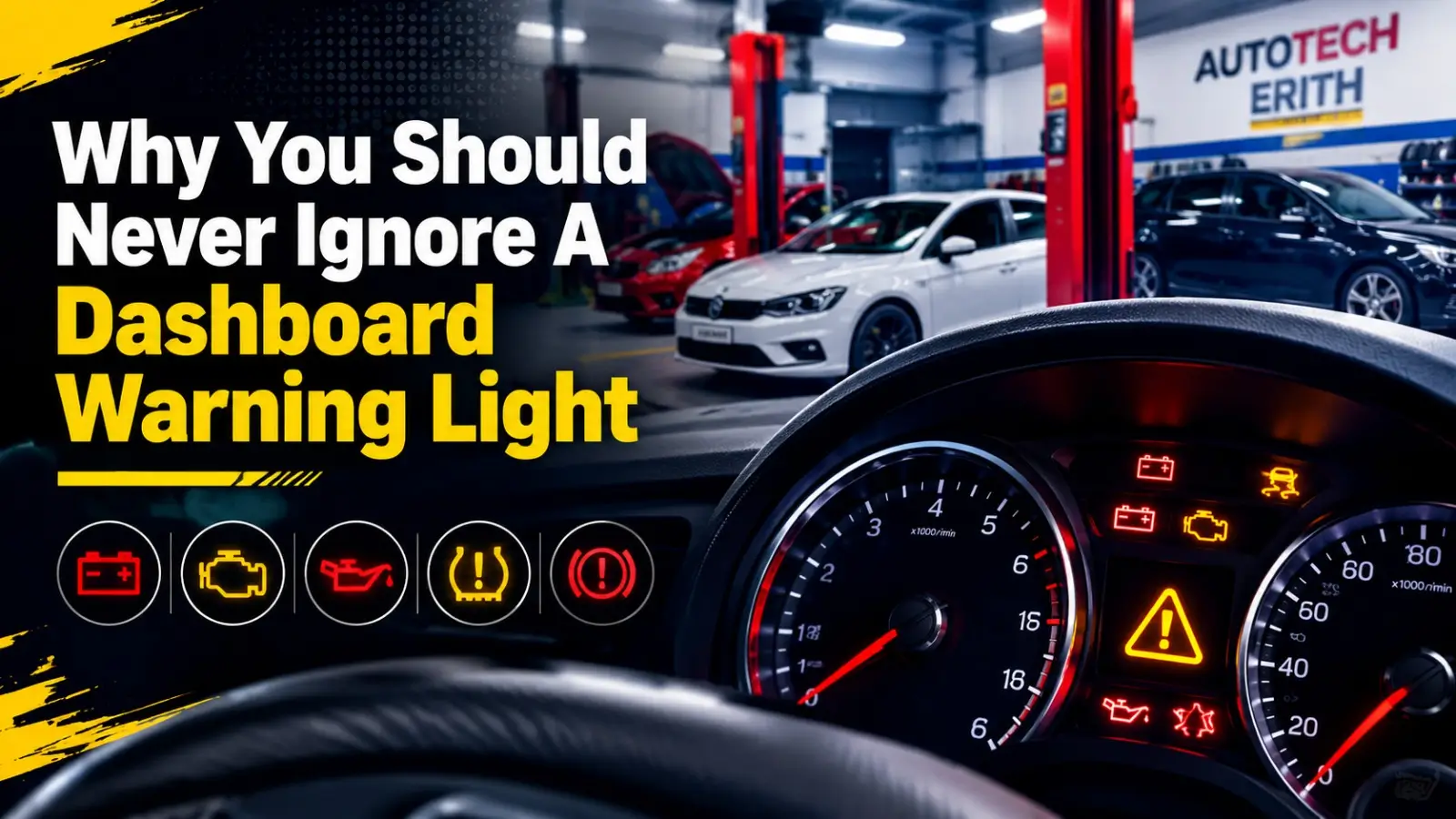
Most drivers have experienced it at some point. You’re driving along as normal when suddenly a warning light appears on the dashboard.
For many people, the first reaction is to hope it will disappear on its own. Sometimes it might, but ignoring dashboard warning lights is rarely a good idea. Modern vehicles are equipped with sophisticated monitoring systems designed to alert drivers when something isn’t working as it should.
While not every warning light indicates a serious fault, they should all be taken seriously. Acting early can often prevent a minor issue from becoming a major repair bill.
Here are some of the most common dashboard warning lights and why you should never ignore them.
Engine Management Light
The engine management light is one of the most common warning lights seen by motorists.
Usually represented by a small engine symbol, this light can indicate a wide range of issues. Sometimes the problem may be relatively minor, such as a faulty sensor, while in other cases it could point to a more significant engine or emissions-related fault.
If the light remains illuminated, it is advisable to have the vehicle checked as soon as possible. If the light begins flashing, this could indicate a more serious problem and should be investigated immediately.
Modern diagnostic equipment allows garages to read fault codes and identify the source of the issue quickly.
Oil Pressure Warning Light
The oil pressure warning light is one of the most important warnings you can receive.
Oil lubricates the moving parts inside your engine. If oil pressure drops too low, critical components may not receive sufficient lubrication, leading to excessive wear or even engine failure.
If this warning light appears while driving, it is usually best to stop the vehicle as soon as it is safe to do so and seek professional advice.
Continuing to drive with low oil pressure can result in very expensive engine repairs.
Battery Warning Light
Many drivers assume the battery warning light simply means they need a new battery. However, the issue may actually involve the charging system.
Possible causes include:
- Alternator problems
- Damaged wiring
- Faulty battery connections
- Battery failure
If the charging system is not functioning correctly, the vehicle may continue running for a short period before eventually losing electrical power.
Early diagnosis can often prevent an inconvenient roadside breakdown.
Coolant Temperature Warning Light
Engines operate within a specific temperature range. If the coolant temperature warning light appears, it may indicate that the engine is overheating.
Potential causes include:
- Low coolant levels
- Cooling system leaks
- Thermostat issues
- Water pump faults
- Radiator problems
Ignoring overheating can lead to serious engine damage, including blown head gaskets and warped engine components.
If the temperature gauge rises significantly or an overheating warning appears, stop driving when safe and allow the engine to cool.
Brake Warning Light
Brakes are among the most important safety systems on any vehicle.
A brake warning light can indicate various issues, including:
- Low brake fluid
- Worn brake components
- Problems within the braking system
- Parking brake faults
Because braking performance directly affects safety, this warning should always be investigated promptly.
Many modern vehicles also feature separate ABS warning lights which indicate faults within the anti-lock braking system.
Tyre Pressure Monitoring Warning Light
Many newer vehicles include tyre pressure monitoring systems (TPMS).
A warning light may indicate that one or more tyres are underinflated. Driving with incorrect tyre pressures can affect handling, braking performance and fuel economy.
It is worth checking all tyre pressures as soon as possible and adjusting them according to the manufacturer’s recommendations.
In some cases, the warning may indicate a faulty TPMS sensor, which can be confirmed during inspection.
Small Problems Often Become Big Problems
One of the biggest mistakes motorists make is assuming a warning light can wait until the next service.
Unfortunately, vehicle faults rarely improve on their own. What starts as a relatively simple issue can often become more expensive if left unresolved.
Modern diagnostic equipment allows technicians to quickly identify the cause of most warning lights, helping drivers avoid unnecessary damage and repair costs.
This is one reason why regular car servicing is so important. Routine servicing helps identify developing issues before dashboard warnings appear and can reduce the likelihood of unexpected breakdowns.
Don’t Wait Until It’s Too Late
Dashboard warning lights are designed to protect both your vehicle and your safety.
If a warning light appears, it is always worth investigating rather than hoping the problem will disappear. Acting early often means a simpler repair, lower costs and less inconvenience.
If you’re unsure what a warning light means, seeking professional advice can provide peace of mind and help keep your vehicle safe and reliable throughout the year.