Looking after your car doesn’t always mean a trip to the garage. There are several simple checks that every driver can carry out at home to help keep their vehicle running smoothly and safely.
Many common problems can be spotted early before they become expensive repairs. Spending just a few minutes every month checking a handful of key areas can help improve reliability, reduce the risk of breakdowns and potentially save money in the long run.
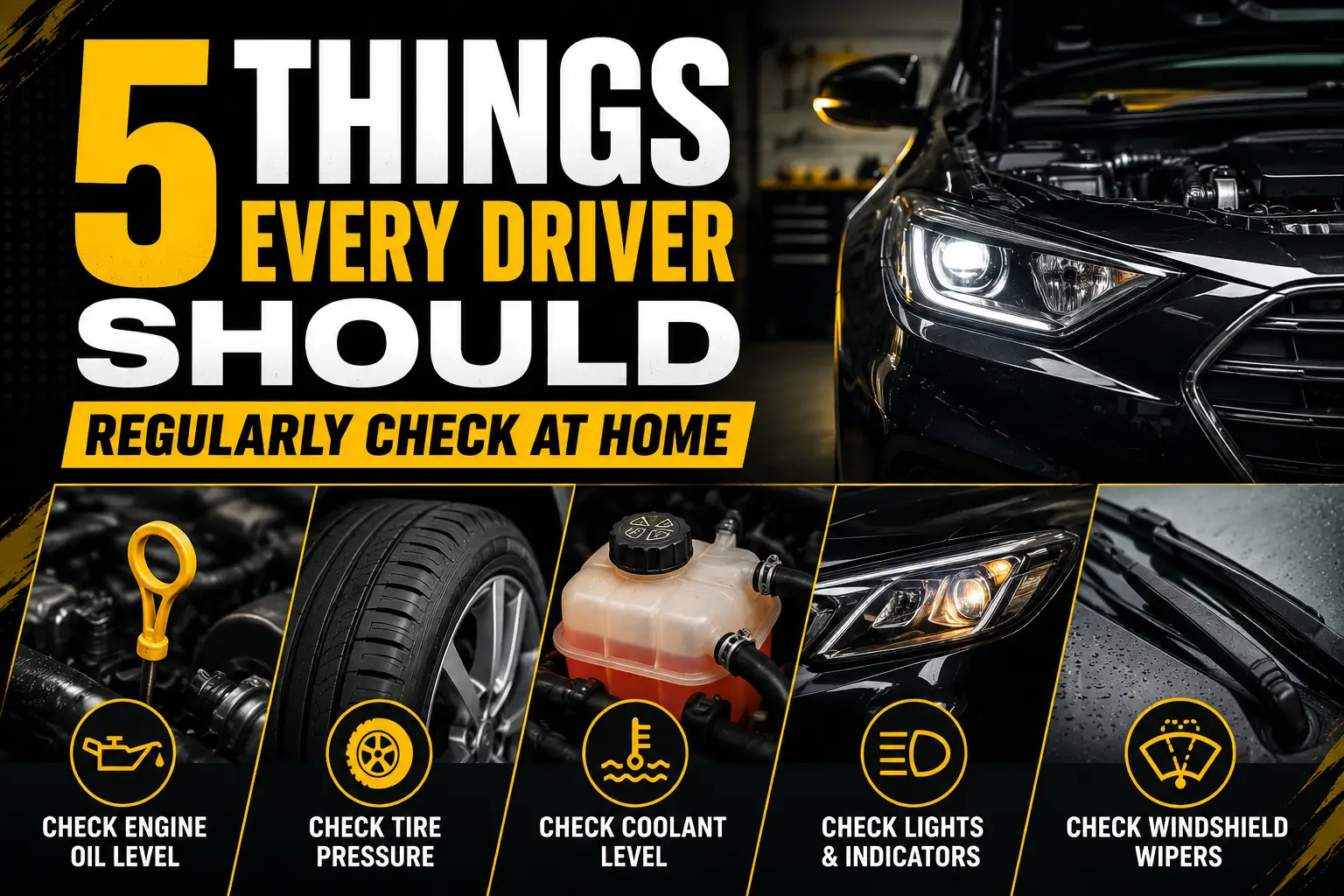
Here are five things every driver should regularly check at home.
Tyre Pressure and Condition
Your tyres are the only part of the car that makes contact with the road, making them one of the most important safety components on your vehicle.
Driving with incorrect tyre pressures can affect handling, increase fuel consumption and cause tyres to wear out more quickly. Most modern petrol stations have tyre inflation facilities, but many drivers now keep a small compressor at home for convenience.
While checking the pressures, take a few moments to inspect the tyres themselves. Look for:
- Uneven wear
- Cracks in the sidewalls
- Cuts or damage
- Objects embedded in the tread
- Low tread depth
The legal minimum tread depth in the UK is 1.6mm across the central three-quarters of the tyre, but many experts recommend replacing tyres before they reach this limit.
Engine Oil Level
Engine oil plays a vital role in lubricating and protecting the moving parts inside your engine.
Running with low oil levels can lead to increased wear and, in severe cases, serious engine damage. Fortunately, checking the oil level is usually quick and straightforward.
Park the vehicle on level ground and allow the engine to cool before removing the dipstick. Wipe it clean, reinsert it fully and then remove it again to check the level.
If the oil level is close to the minimum mark, top it up using the correct grade of oil recommended by the manufacturer.
Regular checks between services can help identify leaks or excessive oil consumption before they become major issues.
Coolant Level
Your engine generates a significant amount of heat when running. The cooling system helps regulate engine temperature and prevent overheating.
Most vehicles have a coolant expansion tank with clearly marked minimum and maximum levels. The coolant should sit between these marks when the engine is cold.
Never remove the coolant cap when the engine is hot, as the system may be under pressure.
If you notice that the coolant level is regularly dropping, it could indicate a leak within the cooling system and should be investigated as soon as possible.
Ignoring coolant issues can lead to overheating and potentially costly repairs.
Lights and Indicators
Faulty bulbs are one of the simplest problems to identify, yet they are often overlooked by drivers.
A quick walk around your vehicle every few weeks can help ensure that all lights are working correctly, including:
- Headlights
- Brake lights
- Rear lights
- Indicators
- Number plate lights
- Fog lights
Many drivers only discover a failed bulb when another motorist points it out.
Having all lights working correctly improves visibility and helps keep you safe on the road, particularly during winter months and poor weather conditions.
Windscreen Wash and Wiper Blades
Good visibility is essential for safe driving.
Many motorists don’t think about their windscreen washers until they run out on a dirty road. Keeping the washer bottle topped up ensures you can quickly clear dirt, salt and road grime from the windscreen when needed.
At the same time, inspect your wiper blades for signs of wear. If they leave streaks, smear water across the glass or make excessive noise, they may need replacing.
Wiper blades are relatively inexpensive and can make a significant difference to visibility during wet weather.
A Few Minutes Can Save You Money
These simple checks only take a few minutes but can help prevent many common motoring problems.
While routine checks at home are valuable, they should never replace professional maintenance. Regular servicing allows trained technicians to inspect components that are not easily visible and identify issues before they develop into expensive repairs.
To learn more about why maintenance matters, read our article on regular car servicing and how it can help reduce long-term motoring costs.
By combining regular home checks with professional servicing, you can help keep your vehicle safe, reliable and ready for the road all year round.