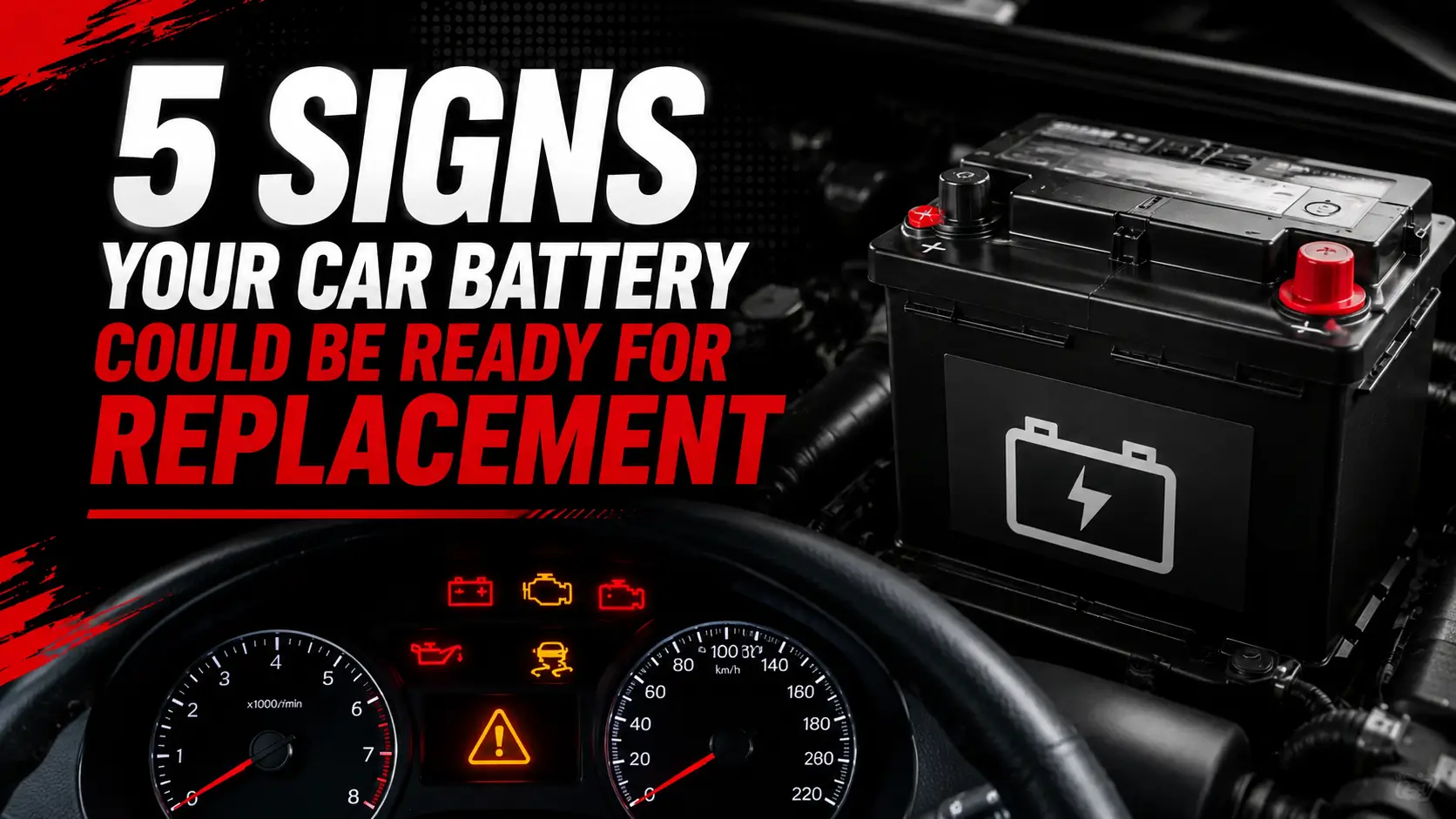
Most drivers don’t think much about their car battery until the day the vehicle refuses to start.
The battery plays a vital role in your vehicle’s electrical system, providing the power needed to start the engine and operate many of the car’s electronic components. Like any part of a vehicle, batteries have a limited lifespan and will eventually need replacing.
Recognising the warning signs of a failing battery can help you avoid the inconvenience of a breakdown and reduce the risk of being stranded when you least expect it.
Here are five common signs that your car battery could be approaching the end of its life
The Engine Is Slow to Start
One of the earliest and most noticeable signs of battery trouble is a slow engine start.
When you turn the key or press the start button, the engine should crank quickly and start without hesitation. If the engine turns over more slowly than usual, especially on cold mornings, the battery may no longer be holding sufficient charge.
A battery gradually loses its ability to deliver power as it ages. While a slow start doesn’t always mean the battery is faulty, it is often one of the first warning signs that it should be tested.
If the problem continues, it is worth having the battery and charging system checked before the issue worsens.
Electrical Components Seem Weaker
Modern vehicles rely heavily on electrical systems.
A weakening battery may affect components such as:
- Interior lights
- Dashboard displays
- Electric windows
- Central locking
- Infotainment systems
- Heated seats
You may notice lights appearing dimmer than normal or electrical systems responding more slowly than usual.
Because today’s vehicles contain significantly more electronics than older models, a healthy battery is more important than ever.
If multiple electrical functions appear weaker than normal, the battery could be struggling to provide sufficient power.
The Battery Warning Light Appears
Many vehicles are equipped with a battery warning light on the dashboard.
While this light doesn’t always mean the battery itself has failed, it does indicate that something within the charging system requires attention.
Possible causes include:
- Battery deterioration
- Alternator faults
- Loose battery terminals
- Damaged wiring
- Charging system issues
Ignoring a battery warning light can eventually lead to a flat battery and an unexpected breakdown.
Having the vehicle inspected promptly can help identify the cause before it leaves you stranded.
The Battery Is More Than Three to Five Years Old
Most car batteries have a lifespan of around three to five years, although this can vary depending on driving habits, weather conditions and vehicle usage.
Short journeys can place additional strain on a battery because there is less time for the alternator to recharge it fully. Likewise, extremely hot or cold weather can accelerate battery wear.
If your battery is approaching the upper end of its expected lifespan, it may be worth having it tested even if no obvious symptoms have appeared.
Many battery failures occur with little warning, particularly during colder weather when batteries are under greater strain.
You Need Frequent Jump Starts
A battery that regularly requires jump starting is often a clear indication that something is wrong.
Occasional battery discharge can happen if lights have been left on or a vehicle has been unused for an extended period. However, if the battery repeatedly struggles to hold a charge, it may no longer be capable of performing properly.
Frequent jump starts should never be viewed as a long-term solution.
The underlying cause should be investigated to determine whether the battery itself is failing or whether another fault within the charging system is responsible.
Can You Prevent Battery Problems?
While no battery lasts forever, there are steps drivers can take to maximise battery life.
These include:
- Driving the vehicle regularly
- Avoiding unnecessary short journeys where possible
- Keeping battery terminals clean
- Switching off lights and accessories when parked
- Having the charging system checked during servicing
Regular maintenance can often identify a weakening battery before complete failure occurs.
Don’t Wait for a Breakdown
A failing battery rarely chooses a convenient moment to stop working. Whether it’s on a cold winter morning, before work or when collecting the children from school, battery problems always seem to happen at the worst possible time.
Recognising the warning signs early can help you arrange replacement before a breakdown occurs.
This is also one reason why regular car servicing remains important. During routine servicing, technicians can often identify battery and charging system issues before they develop into more serious problems.
A healthy battery helps ensure your vehicle starts reliably, operates efficiently and remains dependable throughout the year. If you notice any of these warning signs, it’s always worth having the battery checked sooner rather than later.